
Introduction
Walk into most operations and you'll see the same problems: technicians hunting for the right tool, nurses searching for supplies, warehouse staff re-checking three shelves before finding the right part.
Every minute spent searching is a minute not spent on value-adding work.
5S is a Lean methodology built to fix exactly this. It organizes, inspects, standardizes, and maintains a workspace so teams can do their actual jobs more reliably, whether that workspace is a shop floor, a hospital supply room, or a shared digital drive.
This article walks through the five 5S principles, the operational and cultural benefits organizations typically report, and a practical path for rolling it out without turning it into a one-off cleanup event.
Key Takeaways
- 5S stands for Sort, Set in Order (Straighten), Shine, Standardize, and Sustain
- Lasting results depend on employee participation, visual controls, standard work, and regular review
- Some organizations add Safety as a sixth S, though safety should be built into every stage regardless
- Physical and digital workspaces both benefit when 5S is adapted to the work being done
What Is 5S Methodology?
5S exists to answer a simple question: can someone walk into this workspace and immediately tell what's normal and what's not? When necessary items are easy to find, abnormalities stand out, teams perform tasks consistently, and teams have a foundation for spotting improvement opportunities.
The five steps come from Japanese terms, each with a standard English equivalent:
| Japanese Term | English Translation |
|---|---|
| Seiri | Sort |
| Seiton | Set in Order / Straighten |
| Seiso | Shine |
| Seiketsu | Standardize |
| Shitsuke | Sustain |
According to ASQ's five S tutorial, the method originated within the Toyota Production System as a way to create a safe, organized workplace that supports visual control and broader Lean thinking. 5S is a foundational Lean tool, not a complete Lean transformation on its own.
Where 5S Applies
5S isn't confined to factory floors. It scales across:
- Manufacturing — tool cribs, machine cells, changeover areas
- Healthcare — supply rooms, medication carts, clinic workflows
- Food and beverage — production lines, sanitation stations
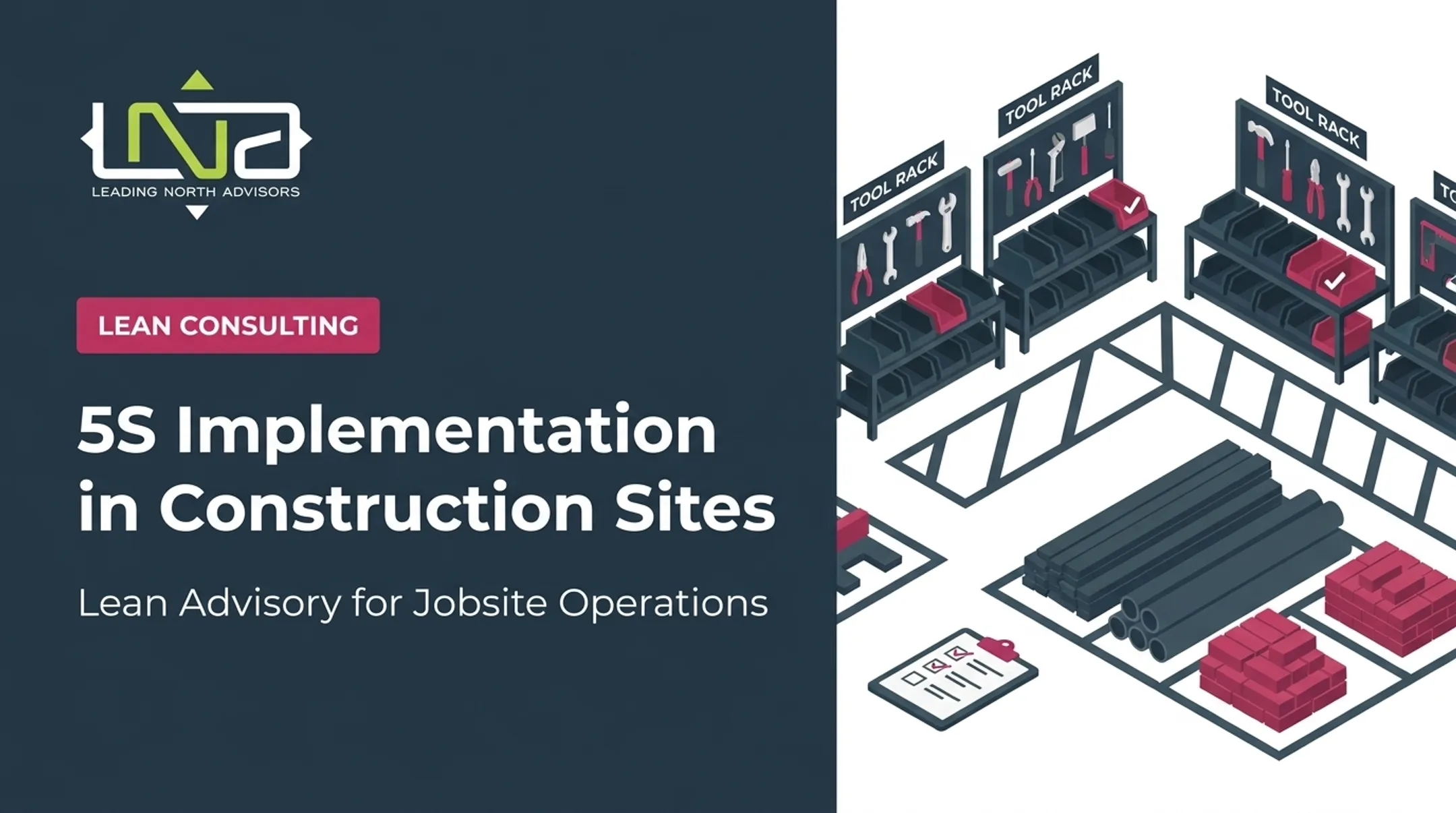
- Construction — jobsite material staging, tool trailers
- Public sector and offices — records rooms, shared drives, service counters
- Warehousing and digital environments — pick zones, folder structures, document repositories
The standards shift depending on the setting, but the logic stays the same.
Why It's a Management System, Not Housekeeping
Calling 5S "just cleaning" misses the point. A tidy area that's also labeled and standardized turns into a diagnostic tool.
If a shadow board has one empty outline where a wrench should be, that's visible in seconds. If a supply cart's contents are marked with min-max levels, a stockout is obvious before it becomes a crisis. That visibility is the actual product of 5S, not the clean floor itself.
The Five Principles of 5S
The five steps are sequential by design: remove what's unnecessary before you arrange what remains, and set the standard only after the workplace has improved. Sustainment routines come last—once there's something worth sustaining.
Sort (Seiri)
Sort separates what's genuinely needed from what isn't. Useful questions include:
- What's the purpose of this item?
- How often is it actually used?
- Who owns it, and where is it needed at point of use?
Items that are obsolete, duplicated, misplaced, or rarely touched get flagged. The standard tool for this is the red-tag process: attach a tag noting what the item is and why it's flagged, move it to a controlled holding area, and set a specific date to make a keep-or-remove decision. This avoids impulsive disposal while still forcing a decision.
Example: A maintenance team red-tags obsolete spare parts, an unused test rig, and three outdated inspection forms sitting in a binder nobody's opened in a year. In a digital workspace, the equivalent might be archiving redundant file versions cluttering a shared drive.
Set in Order or Straighten (Seiton)
Once only necessary items remain, each one gets a logical, visible home based on frequency of use, workflow sequence, ergonomics, and safety.
Common tools include:
- Shadow boards outlining exactly where each tool belongs
- Labeled bins and floor markings showing designated zones
- Point-of-use storage placed where the work actually happens
- Color coding to distinguish categories at a glance
- Digital folder structures with consistent naming conventions
Done well, this arrangement makes a missing or misplaced item obvious immediately. Nobody has to rely on memory or ask a coworker where something goes.
Shine (Seiso)
Shine pairs cleaning with inspection. As teams clean, they're also looking for leaks, wear, damage, contamination, or defects that a dirty surface would otherwise hide.
This requires clear ownership: who cleans what, how often, and what happens when they spot a problem. Escalation paths matter as much as the cleaning schedule itself.
Example: In manufacturing, a daily wipe-down of machine surfaces a small hydraulic leak before it becomes a breakdown. In food processing, the same routine catches a sanitation risk before it becomes a compliance issue. In healthcare, it might catch expired supplies before they're used.
Standardize (Seiketsu)
Standardize turns the first three steps into a repeatable method rather than a one-time event. This typically means:
- Short checklists teams can actually follow
- Photographs showing the correct condition
- Visual work instructions posted at the point of use
- Defined roles for who checks what and how often
The standard should reflect the best known current method, not an aspirational ideal, and it needs to stay simple enough that employees can follow it and update it as conditions change.
Sustain (Shitsuke)
Sustain is where most 5S efforts fail. Making it part of daily work usually means:
- Onboarding new hires into the standard
- Coaching on the floor
- Scheduled 5S activities
- Visible leadership participation
- Routine audits
The key distinction: audit findings should trigger problem-solving, not just enforcement. If an area keeps failing the same audit item, that's a signal the standard itself needs revisiting—not evidence that people need policing.

Benefits and Business Impact of 5S
5S delivers benefits across three operational areas: time, visibility, and safety. None of these are automatic, and results depend on how rigorously the program is run and sustained. A related effect shows up in ownership and culture once standards stay visible day to day.
Time and flow. Sort and Set in Order directly attack wasted motion, searching, congestion, and excess storage. When tools and materials have a defined home, employees stop losing minutes hunting for what they need.
Visibility and quality. Shine and Standardize surface equipment abnormalities, process drift, contamination risk, and maintenance needs before they escalate into defects or downtime.
A 2024 systematic review of 5S in healthcare settings found improved organization, efficiency, safety, and staff satisfaction across the studies it examined, alongside reduced waste and costs. The same review flagged small sample sizes and limited long-term tracking as common weaknesses in the underlying studies.
Safety. Clear walkways, controlled storage, ergonomic placement, and visible hazard markers reduce a specific category of risk. This is a meaningful contribution to workplace safety, but it's not a substitute for a complete safety-management system.

People and culture. Beyond the metrics, 5S tends to shift how people relate to their workspace:
- Greater ownership over a defined area
- Clearer expectations for new hires during onboarding
- Better cross-shift handoffs when the standard is visible, not verbal
- More natural opportunities for frontline employees to flag improvement ideas
What to measure before you start. Establish a baseline before making changes so improvement is measurable rather than assumed. Track at least:
- Time spent searching for tools, parts, or information
- Changeover or handoff delays
- Defect and rework rates
- Near misses and safety observations
- Maintenance response times
- Space utilization, audit scores, and employee suggestions submitted
Avoid quoting generic industry statistics as guaranteed outcomes. Your baseline is the only number that matters for your operation.
How to Implement 5S Successfully
A 5S launch that tries to "clean everything at once" tends to stall within a few weeks. Successful implementation needs leadership backing, frontline involvement, a defined scope, dedicated improvement time, and a sustainment plan from day one.
Select a Pilot Area and Establish a Baseline
Start with one work cell, department, clinic area, warehouse zone, or digital workflow. Choose a spot where the problem is visible and the team can actually influence the outcome. Tennessee MEP's implementation guidance describes an initial pilot typically running 2-5 days with on-site facilitation, followed by a phased rollout across the facility.
Before touching anything, document the starting condition:
- Take photographs of the current state
- Observe the actual process, not the documented one
- Collect employee feedback on pain points
- Record relevant baseline measures (search time, defect rates, etc.)
Then define the pilot's objectives, who has decision rights, who's participating, the timeline, and the criteria for deciding whether it's ready to scale.
Run the Five-Step Improvement Cycle
The practical sequence follows the five principles directly: sort and red-tag, arrange and label, clean and inspect, document the new standard, then establish daily or periodic routines.
The people doing the work every day should decide where items go, how cleaning happens, and what the visual controls look like. A standard imposed from outside rarely survives contact with the real workflow.
Once the new arrangement is in place, run a before-and-after review that tests accessibility, safety, quality, and flow, not just how the area looks.

Build Sustainment into Daily Management
This is where 5S either becomes permanent or fades out. Sustainment needs:
- Assigned ownership by role, shift, or area
- Short checklists and visual boards teams actually use
- Layered reviews with clear escalation paths
- Leadership presence through regular gemba walks and coaching
Post audit results and discuss them with the team directly. Track corrective actions to completion instead of logging them and moving on. Recurring issues point to a root cause worth solving, not another reminder memo.
Leading North Advisors builds this sustainment layer directly into its 5S engagements, pairing hands-on training with employee ownership so teams can maintain and evolve the standard without needing outside support indefinitely.
Scale Across Teams or Sites
Once the pilot standard is stable, standardize the core expectations, such as visual language and audit principles, while letting local teams adapt specifics to their equipment, regulations, and customer requirements. Share pilot lessons, train internal champions, and expand in phases rather than rolling out everywhere before the pilot has proven itself.
Multi-site rollouts also need leadership alignment and change-management support so standards do not drift between locations. Leading North Advisors supports that scale-up through Lean transformation consulting and industry-tailored certification programs that keep the rollout consistent.
5S Tools and Related Lean Methods
A handful of tools show up in nearly every 5S program:
- Red tags for flagging items during Sort
- Shadow boards and floor markings for Set in Order
- Color coding and labels for quick visual reference
- Checklists and audit forms for Standardize and Sustain
- Before-and-after photographs documenting progress
- Digital task or document systems for non-physical workspaces
The common thread is visual management: making the expected condition, the current condition, ownership, and any abnormality understandable at a glance, without needing someone to explain it.
How 5S Connects to Kaizen and Other Lean Tools
5S and Kaizen are related but distinct. 5S creates a stable, visible workplace, and that stability is what makes it possible for teams to actually spot small improvement opportunities. Kaizen is the broader, ongoing practice of pursuing those improvements. One creates the conditions; the other is the continuous work.
5S also supports:
- Total Productive Maintenance, by making equipment condition visible during Shine
- Standard work, which formalizes what Standardize documents
- Kanban, which relies on the same visual, point-of-use logic
- Lean Six Sigma, where a stable 5S foundation makes process data more reliable
None of these replace 5S, and 5S doesn't replace them either.
6S and 7S: What the Extra Letters Mean
Some organizations extend the framework beyond five elements:
- 6S adds Safety as a distinct sixth element instead of treating it as embedded throughout
- 7S has no universal definition; different organizations use it for different additions
If your organization adopts either variant, define exactly what it includes before rollout so teams share one definition.
Conclusion
5S works because it makes work easier to see, perform, maintain, and improve. That sounds simple, but it's the difference between a workspace that runs on institutional memory and one that runs on a visible standard anyone can follow.
The organizations that get lasting results share a few habits:
- Start with a focused pilot
- Involve the people doing the actual work
- Use visual standards instead of verbal instructions
- Measure the starting condition honestly
- Treat sustainment as part of daily management, not an afterthought
If you're a leader looking at a workspace right now, pick one area, name one source of waste or risk you already know exists, and start that conversation with the team working there this week.
Organizations that want expert support building or scaling that effort can look to Leading North Advisors for Lean transformation consulting and training built around real project application.
Frequently Asked Questions
What is 5S in simple terms?
5S is a method for removing unnecessary items, organizing what remains, cleaning and inspecting the area, creating a standard for how it should look, and maintaining that standard over time.
What are examples of 5S in practice?
A team might red-tag unused equipment, label storage bins by contents, inspect machinery while cleaning it, document the new layout as the standard, and then audit the area monthly to confirm it's holding.
What tools are commonly used in 5S?
Common tools include red tags, labels, floor markings, shadow boards, color coding, checklists, visual boards, standard work documents, and audit forms.
What is the 5S program?
A 5S program is the structured rollout and ongoing maintenance of the five principles across a defined area, team, process, or organization—not a one-time cleanup event.
What are the 5S principles of lean?
The five principles are Sort (remove unnecessary items), Set in Order (arrange what remains), Shine (clean and inspect), Standardize (document the method), and Sustain (maintain the discipline).
Is 5S part of Kaizen?
They're related but distinct. 5S establishes workplace organization and visual discipline, while Kaizen is the broader practice of continuous, incremental improvement that a stable 5S environment makes possible.